Hachette provides comprehensive global distribution services in the following territories:

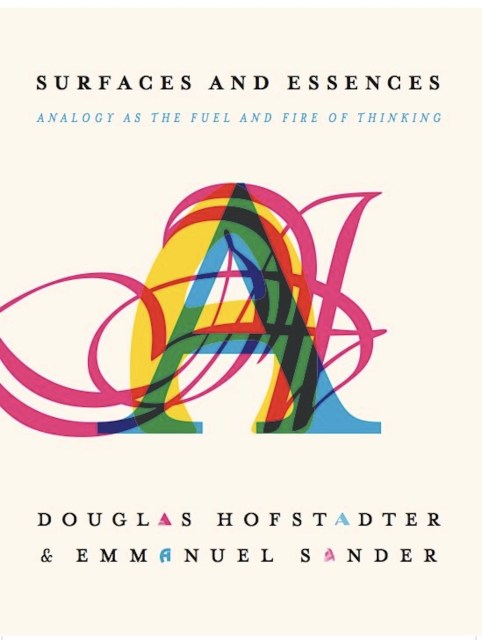
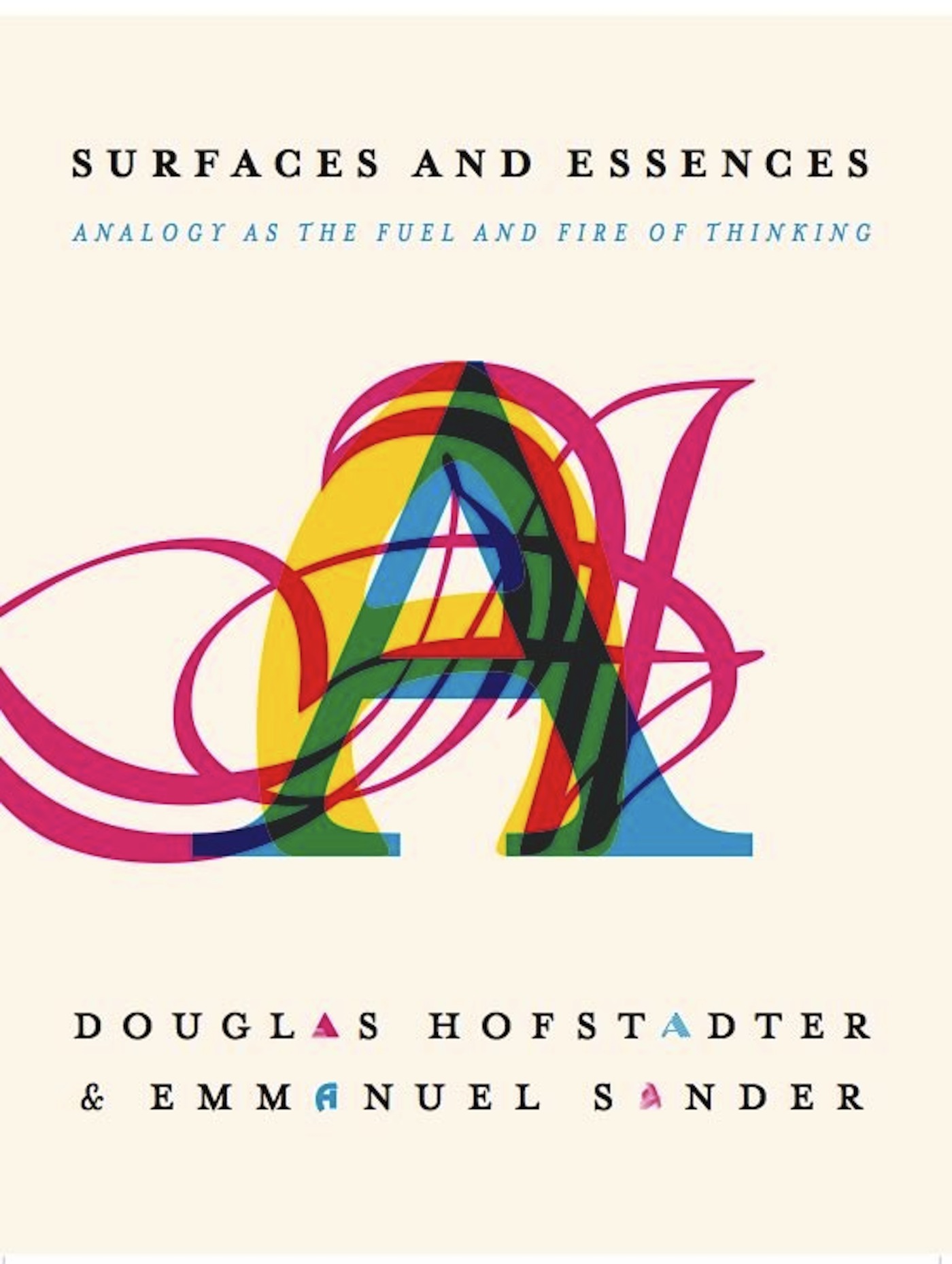
Surfaces and Essences
Analogy as the Fuel and Fire of Thinking
Contributors
By Emmanuel Sander
Formats and Prices
- On Sale
- Apr 23, 2013
- Page Count
- 592 pages
- Publisher
- Basic Books
- ISBN-13
- 9780465021581
Price
$23.99Price
$30.99 CADFormat
Format:
- ebook $23.99 $30.99 CAD
- Hardcover $40.00 $51.00 CAD
Buy from Other Retailers:
A revelatory foray into cognition and the dynamics of the mind.
“Surfaces and Essences warrants a place alongside Gödel, Escher, Bach and major recent treatments of human cognition. Analogy is not the endpoint of understanding, but its indispensable beginning.” –Science
Analogy is the core of all thinking.
This is the simple but unorthodox premise that Pulitzer Prize–winning author Douglas Hofstadter and French psychologist Emmanuel Sander defend in their new work. Hofstadter has been grappling with the mysteries of human thought for over thirty years. Now, with his trademark wit and special talent for making complex ideas vivid, he has partnered with Sander to put forth a highly novel perspective on cognition.
We are constantly faced with a swirling and intermingling multitude of ill-defined situations. Our brain’s job is to try to make sense of this unpredictable, swarming chaos of stimuli. How does it do so? The ceaseless hail of input triggers analogies galore, helping us to pinpoint the essence of what is going on. Often this means the spontaneous evocation of words, sometimes idioms, sometimes the triggering of nameless, long-buried memories.
Why did two-year-old Camille proudly exclaim, “I undressed the banana!”? Why do people who hear a story often blurt out, “Exactly the same thing happened to me!” when it was a completely different event? How do we recognize an aggressive driver from a split-second glance in our rearview mirror? What in a friend’s remark triggers the offhand reply, “That’s just sour grapes”? What did Albert Einstein see that made him suspect that light consists of particles when a century of research had driven the final nail in the coffin of that long-dead idea?
The answer to all these questions, of course, is analogy-making – the meat and potatoes, the heart and soul, the fuel and fire, the gist and the crux, the lifeblood and the wellsprings of thought. Analogy-making, far from happening at rare intervals, occurs at all moments, defining thinking from top to toe, from the tiniest and most fleeting thoughts to the most creative scientific insights.
Like Gödel, Escher, Bach before it, Surfaces and Essences will profoundly enrich our understanding of our own minds. By plunging the reader into an extraordinary variety of colorful situations involving language, thought, and memory, by revealing bit by bit the constantly churning cognitive mechanisms normally completely hidden from view, and by discovering in them one central, invariant core – the incessant, unconscious quest for strong analogical links to past experiences – this book puts forth a radical and deeply surprising new vision of the act of thinking.
Genre:
-
Longlisted for the PEN / E. O. Wilson Literary Science Writing Award
-
“Surfaces and Essences warrants a place alongside Gödel, Escher, Bach and major recent treatments of human cognition. Analogy is not the endpoint of understanding, but its indispensable beginning.”Science
-
“Lucid and, page for page, a delight to read… Surfaces and Essences contains gems of insight.”Nature
-
“Clear, lively, and personal.”Wall Street Journal
-
“Knowing what makes a duck a bird and what makes a plane not a bird may not seem like very profound mental feats, but Douglas Hofstadter and Emmanuel Sander see such cognitive connections as part of an extraordinarily profound process… Be prepared to become hyper-conscious of the myriad of analogies one makes every moment of every day... The end result is a book that is ambitious and provocative.”Globe and Mail (Canada)
-
“A revelatory foray into the dynamics of the mind.”Booklist (Starred)
-
“How do we know what we know? How do we know at all? With an enjoyable blend of hard science and good storytelling, Hofstadter and French psychologist Sander tackle these most elusive of philosophical matters… It’s worth sticking with Hofstadter’s long argument, full of up-to-date cognitive science and, at the end, a beguiling look at how the theory of relativity owes to analogy… First rate popular science: difficult but rewarding.”Kirkus (Starred)
-
“Like Hofstadter’s Pulitzer Prize-winning Gödel, Escher, Bach, this work executes, from a very complex thesis, an understanding by general readers while also appealing to specialists in philosophy of mind and cognitive science.”Library Journal
-
“Hofstadter and Sander’s book is a wonderful and insightful account of the role of analogy in cognition. Immensely enjoyable, with a plethora of fascinating examples and anecdotes, this book will make you understand your own thought processes in a wholly new way. It’s analogy all the way down!”Melanie Mitchell, author of Complexity
-
“I am one of those cognitive scientists who believe that analogy is a key to explaining human intelligence. This magnum opus by Douglas Hofstadter, who has reflected on the nature of analogy for decades, and Emmanuel Sander, is a milestone in our understanding of human thought, filled with insights and new ideas.”Steven Pinker, author of How the Mind Works and The Stuff of Thought
-
“Hofstadter and Sander’s book starts with two audacious goals: to show that none of us can think a minute without using a variety of analogies, and that becoming aware of this fact can help us think more clearly. Then, patiently and with humor, the authors prove their claims across the whole spectrum, from everyday conversation to scientific thought processes, even that of Einstein.”Gerald Holton, Harvard University
-
“Placing analogy at the core of cognition Hofstadter and Sander provide a persuasive answer to the question ‘what is thought?’ Analogy is the mechanism underlying the myriad instances of concept formation and categorization we perform throughout any day, whether unconscious or explicit, without which there would be no thought. They mount a compelling case through analysis of a wealth of insightful, imaginative and real exemplars, from everyday thinking to the highest achievements of the human mind, which are sure to persuade a broad range of readers.”Nancy J. Nersessian, author of Creating Scientific Concepts