Email Novel Suspects Logo
Hachette provides comprehensive global distribution services in the following territories:
United States flag Switch to United States region United Kingdom flag Switch to United Kingdom region Australia flag Switch to Australia region India flag Switch to India region

Hachette Book Group menu

  • Home
  • Publishers
  • Customers
  • Sustainability
  • Retailer Portal
  • Location
  • Our Culture
  • Our Careers
Go to Hachette Book Group home

Hachette Book Group menu

  • Home
  • Publishers
  • Customers
  • Sustainability
  • Retailer Portal
  • Location
  • Our Culture
  • Our Careers

By clicking “Accept,” you agree to the use of cookies and similar technologies on your device as set forth in our Cookie Policy and our Privacy Policy. Please note that certain cookies are essential for this website to function properly and do not require user consent to be deployed.

Reflections on the Revolution in France (Barnes & Noble Digital Library)

Reflections on the Revolution in France (Barnes & Noble Digital Library) Open the full-size image

Loading

Contributors

By Edmund Burke

Introduction by Camil Ungureanu

Formats and Prices

On Sale
Apr 16, 2012
Page Count
272 pages
Publisher
BookAnnex
ISBN-13
9781411468795

Price

$3.99

Price

$4.99 CAD

Format

ebook (Digital original)

Format:

ebook (Digital original) $3.99 $4.99 CAD

Buy from Other Retailers:

  • Amazon
  • Apple Books
  • Barnes & Noble
  • Google Play
  • Ebooks.com
  • Kobo

Edmund Burke’sReflectionson the Revolution in France (1790) is the undisputed foundation of modern conservatism. It is a brilliant pamphlet against the French Revolution, one rooted in the solid ground of a practical political philosophy. Burke’s central argument is that the French Revolution was driven by a utopian egalitarianism, which was dangerously disconnected from the actual experience of politics. A conservative, he grants centrality to the practical rationality of existing socio-political traditions and institutions, criticizes radical changes at all costs, and advocates gradual political reforms.

“But what is liberty without wisdom, and without virtue? It is the greatest of all possible evils; for it is folly, vice, and madness, without tradition or restraint.”— Edmund Burke
Genre:

  • History Europe France

Series:

  • Barnes & Noble Digital Library

Edmund Burke was an outstanding politician, polemicist, and political thinker, as well as a theorist of aesthetics and literature. Born in Dublin in 1729, he graduated from Trinity College in 1748. From there, he moved to London with the intention of studying law at the Inns of Court, but soon abandoned his studies to pursue a career in literature.  Soon he was moving in the artistic circle of Joshua Reynolds, Samuel Johnson, David Garrick, and Oliver Goldsmith.. In 1756, Burke published A Vindication of Natural Society, a satire that took issue with the rationalist principles of the Enlightenment. In 1757, he wrote a short treatise that laid the groundwork for a new conception of aesthetics that would influence, among others, Immanuel Kant.

You May Also Like

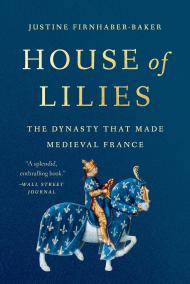
House of Lilies
House of Lilies $21.99 $28.99 CAD
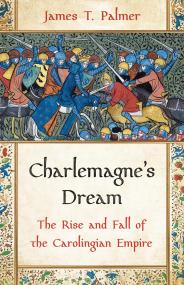
Charlemagne’s Dream
Charlemagne’s Dream $35.00 $46.00 CAD
The Last Emperor of Mexico
The Last Emperor of Mexico $19.99 $25.99 CAD
Impossible City
Impossible City $30.00 $39.00 CAD
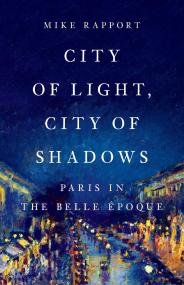
City of Light, City of Shadows
City of Light, City of Shadows $35.00 $45.00 CAD

Edmund Burke

About the Author

Edmund Burke was an outstanding politician, polemicist, and political thinker, as well as a theorist of aesthetics and literature. Born in Dublin in 1729, he graduated from Trinity College in 1748. From there, he moved to London with the intention of studying law at the Inns of Court, but soon abandoned his studies to pursue a career in literature.  Soon he was moving in the artistic circle of Joshua Reynolds, Samuel Johnson, David Garrick, and Oliver Goldsmith.. In 1756, Burke published A Vindication of Natural Society, a satire that took issue with the rationalist principles of the Enlightenment. In 1757, he wrote a short treatise that laid the groundwork for a new conception of aesthetics that would influence, among others, Immanuel Kant.

Learn more about this author

▲
HBG Distribution logo
  • FAQ
  • Vendors
  • Cookie Policy
  • Report Piracy
  • Fraud Alert
  • CPSIA
  • GPSR
© 2026 Hachette Book Group | Terms of Use | Privacy Policy | Cookie Policy | Code of Ethics | Contact Us | Do Not Sell My Personal Information