Email Novel Suspects Logo
Hachette provides comprehensive global distribution services in the following territories:

United States flag Switch to United States region United Kingdom flag Switch to United Kingdom region Australia flag Switch to Australia region India flag Switch to India region

Hachette Book Group menu

  • Home
  • Publishers
  • Customers
  • Sustainability
  • Retailer Portal
  • Location
  • Our Culture
  • Our Careers
Go to Hachette Book Group home

Hachette Book Group menu

  • Home
  • Publishers
  • Customers
  • Sustainability
  • Retailer Portal
  • Location
  • Our Culture
  • Our Careers

By clicking “Accept,” you agree to the use of cookies and similar technologies on your device as set forth in our Cookie Policy and our Privacy Policy. Please note that certain cookies are essential for this website to function properly and do not require user consent to be deployed.

Principia Ethica (Barnes & Noble Digital Library)

Principia Ethica (Barnes & Noble Digital Library) Open the full-size image

Loading

Contributors

By G. E. Moore

Introduction by G. Scott Davis

Formats and Prices

On Sale
Mar 13, 2012
Page Count
264 pages
Publisher
BookAnnex
ISBN-13
9781411466524

Price

$3.99

Price

$4.99 CAD

Format

ebook (Digital original)

Format:

ebook (Digital original) $3.99 $4.99 CAD

Buy from Other Retailers:

  • Amazon
  • Apple Books
  • Barnes & Noble
  • Google Play
  • Ebooks.com
  • Kobo

This edition includes a modern introduction and a list of suggested further reading.
 
When Principia Ethica appeared, in 1903, it became something of a sacred text for the Cambridge-educated elite who formed the core of the Bloomsbury Group. In a letter of October 11, 1903, Strachey confesses to Moore that he is “carried away” by Principia, which inaugurates, for him, “the beginning of the Age of Reason.” Moore’s critique of convention, his caustic dismissal of his philosophical predecessors, and the relentless rigor of his method promised a revolution in morality commensurate with the modernist transformation of art and literature. Principia Ethica shifted the study of ethics away from normative questions to issues of “metaethics,” the study of ethical concepts.

Genre:

  • Nonfiction
  • |
  • Philosophy General

Series:

  • Barnes & Noble Digital Library

George Edward Moore didn't intend to be a philosopher. He was born in 1873 to devout evangelical parents, but according to his autobiography, "long before I left school, I was, to use a word then popular, a complete Agnostic." Moore went to Trinity College, Cambridge, in 1892, as a Classics scholar, but by the end of his freshman year his new friend Bertrand Russell was urging Moore to take up philosophy. Moore was elected to the secret Cambridge Conversazione Society, more commonly known as the Apostles, the elite of the intellectual community at Cambridge. In 1898 he was elected to a six-year fellowship at Trinity. In 1925 Moore was appointed Professor of Philosophy at Cambridge, a position that he held until his retirement in 1939. He continued to write and lecture regularly until his death in 1958.

You May Also Like

The Illustrated Walden
The Illustrated Walden $28.99 $38.99 CAD
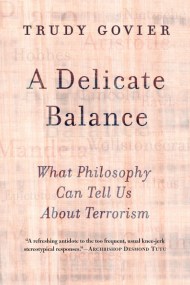
A Delicate Balance
A Delicate Balance $19.99 $25.99 CAD
The Dawn Of Universal History
The Dawn Of Universal History $25.99 $33.99 CAD
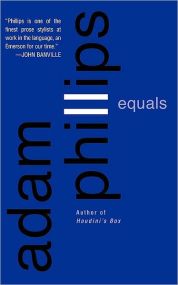
Equals
Equals $19.99 $25.99 CAD
The Mysterious Flame
The Mysterious Flame $19.99 $25.99 CAD

G. E. Moore

About the Author

George Edward Moore didn’t intend to be a philosopher. He was born in 1873 to devout evangelical parents, but according to his autobiography, “long before I left school, I was, to use a word then popular, a complete Agnostic.” Moore went to Trinity College, Cambridge, in 1892, as a Classics scholar, but by the end of his freshman year his new friend Bertrand Russell was urging Moore to take up philosophy. Moore was elected to the secret Cambridge Conversazione Society, more commonly known as the Apostles, the elite of the intellectual community at Cambridge. In 1898 he was elected to a six-year fellowship at Trinity. In 1925 Moore was appointed Professor of Philosophy at Cambridge, a position that he held until his retirement in 1939. He continued to write and lecture regularly until his death in 1958.

Learn more about this author

▲
HBG Distribution logo
  • FAQ
  • Vendors
  • Cookie Policy
  • Report Piracy
  • Fraud Alert
  • CPSIA
  • GPSR
© 2026 Hachette Book Group | Terms of Use | Privacy Policy | Cookie Policy | Code of Ethics | Contact Us | Do Not Sell My Personal Information