Email Novel Suspects Logo
Hachette provides comprehensive global distribution services in the following territories:

United States flag Switch to United States region United Kingdom flag Switch to United Kingdom region Australia flag Switch to Australia region India flag Switch to India region

Hachette Book Group menu

  • Home
  • Publishers
  • Customers
  • Sustainability
  • Retailer Portal
  • Location
  • Our Culture
  • Our Careers
Go to Hachette Book Group home

Hachette Book Group menu

  • Home
  • Publishers
  • Customers
  • Sustainability
  • Retailer Portal
  • Location
  • Our Culture
  • Our Careers

By clicking “Accept,” you agree to the use of cookies and similar technologies on your device as set forth in our Cookie Policy and our Privacy Policy. Please note that certain cookies are essential for this website to function properly and do not require user consent to be deployed.

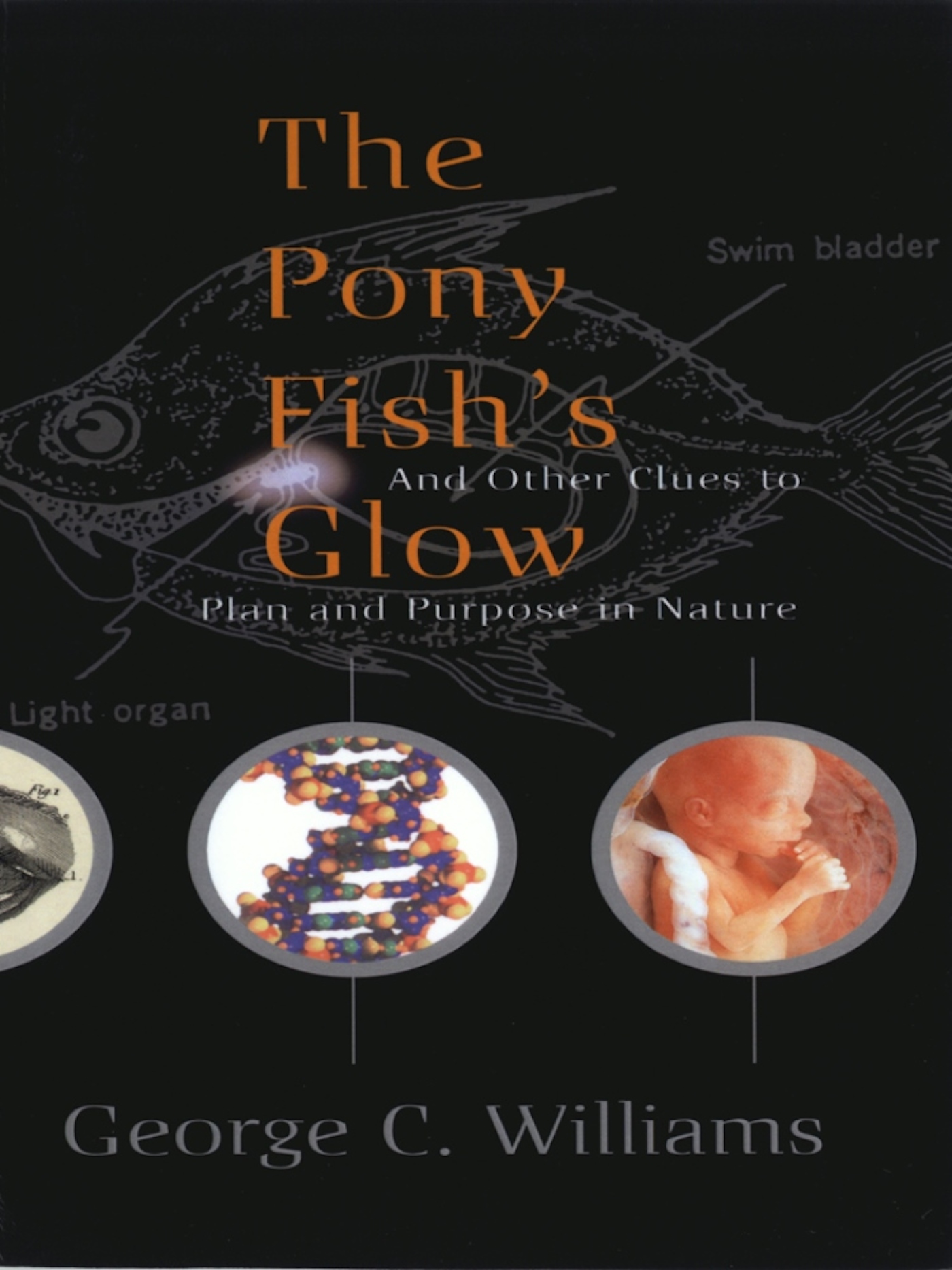
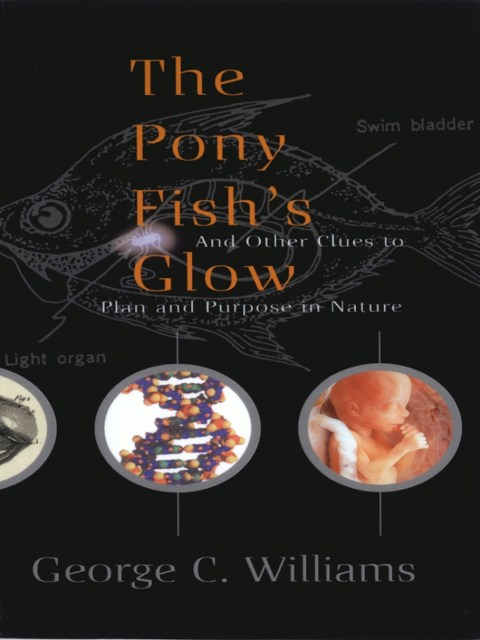
The Pony Fish’s Glow

And Other Clues To Plan And Purpose In Nature
The Pony Fish’s Glow Open the full-size image

Loading

Contributors

By George C. Williams

Formats and Prices

On Sale
Nov 25, 2014
Page Count
192 pages
Publisher
Basic Books
ISBN-13
9780465066919

Price

$9.99

Price

$12.99 CAD

Format

  1. Trade Paperback

Format:

  1. ebook $9.99 $12.99 CAD
  2. Trade Paperback $19.99 $25.99 CAD

Buy from Other Retailers:

  • Amazon
  • Apple Books
  • Barnes & Noble
  • Google Play
  • Ebooks.com
  • Kobo

We may regard ourselves as the most advanced species on the planet, but have we really reached our optimum design? Isn’t’t there always room for improvements? Before you answer, let noted evolutionary biologist George C. Williams remind you of both the exquisite adaptations and absurd maladaptations nature has bestowed upon us, the self-proclaimed “pinnacle of evolution.”Picking up where Darwin left off, Williams combines philosophical perspective and scientific method to provide a foundation for the answers to some fascinating questions. He explains why our bodies have to deteriorate so disastrously with old age. He gives us logical reasons to explain why we crave foods like sugar and fat that have been proven time and again to be detrimental to our health. And Williams single-handedly deflates our Homo sapiens sapiens ego with such insights as: Our eyesight — it may seem superior, but not when compared to that of the invertebrate squid, whose eye has developed over time to prove more efficient than ours. And wouldn’t’t it make more sense to have a third eye, located on the back of the head? We could have stereoscopic vision in front and rear-vision warning us of danger sneaking up behind. Rear-view mirrors would become a thing of the past. And why stop at three eyes? This fascinating new book is markedly different from all previous work on evolutionary biology. Using the pony fish and its luminescent abdomen as the perfect evolutionary mystery, Williams explores the intricacies of nature’s designs. Rather than telling us how or why the pony fish got its light, Williams explains the functional reasons why the pony fish keeps its light. He also explains why our species keeps arbitrary or malfunctioned features like the reproductive and excretory systems’ sharing of parts. George C. Williams, one of today’s most qualified evolutionary biologists, has written an important, entertaining, and thought-provoking addition to a science that has captivated the world for almost 150 years.

Genre:

  • Nonfiction
  • Science
  • Life Sciences
  • Biology

You May Also Like

Flush
Flush $19.99 $24.99 CAD
Pump
Pump $17.99 $22.99 CAD
Apollo’s Arrow
Apollo’s Arrow $19.99 $24.99 CAD
The Rules of Contagion
The Rules of Contagion $24.00 $32.00 CAD
Unique
Unique $30.00 $38.00 CAD

Newsletter Signup

Get recommended reads, deals, and more from Hachette

By clicking ‘Sign Up,’ I acknowledge that I have read and agree to Hachette Book Group’s Privacy Policy and Terms of Use

George C. Williams

About the Author

George C. Williams taught at the State University of New York at Stony Brook for thirty years where he was instrumental in establishing the Marine Science Research Center and the Department of Ecology and Evolution, from which he retired in 1990. He has earned many honors, including a Guggenheim Fellowship, election to the National Academy of Sciences, and recognition as Ecologist of the Year in 1989 by the Ecological Society of America.

Learn more about this author

▲
HBG Distribution logo
  • FAQ
  • Vendors
  • Cookie Policy
  • Report Piracy
  • Fraud Alert
  • CPSIA
  • GPSR
© 2025 Hachette Book Group | Terms of Use | Privacy Policy | Contact Us | Do Not Sell My Personal Information