Hachette provides comprehensive global distribution services in the following territories:
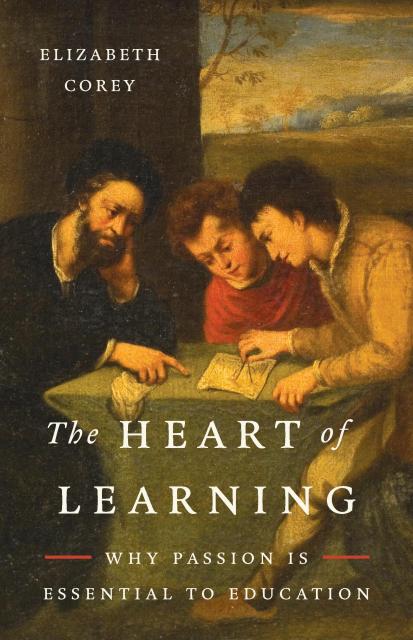
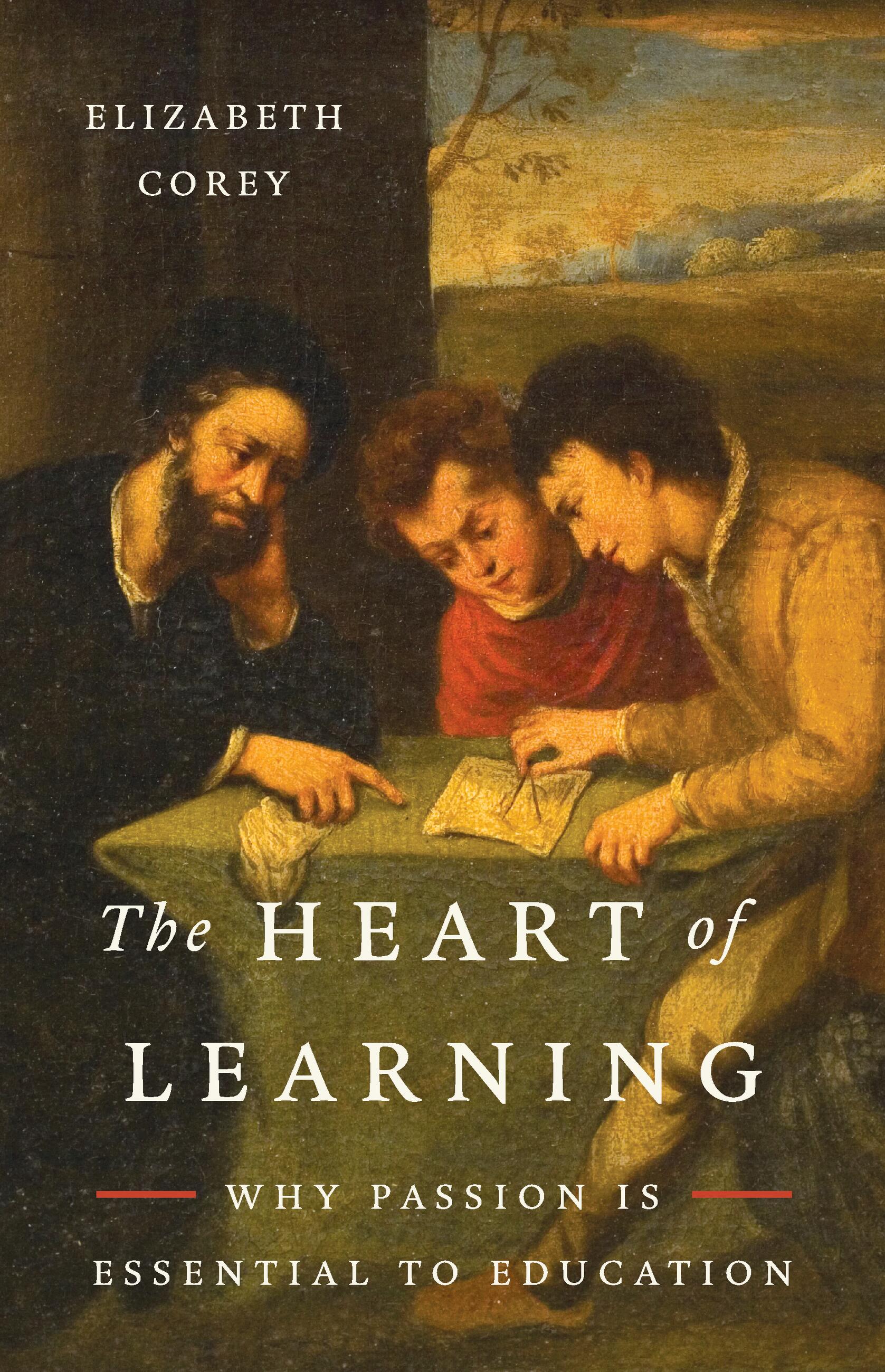
The Heart of Learning
Why Passion Is Essential to Education
Formats and Prices
- On Sale
- Jan 19, 2027
- Page Count
- 256 pages
- Publisher
- Basic Liberty
- ISBN-13
- 9781541607668
Price
$17.99Price
$22.99 CADFormat
Format:
- ebook $17.99 $22.99 CAD
- Hardcover $30.00 $40.00 CAD
Preorder from Retailers:
To preserve and rejuvenate the liberal arts in a myopically “practical” society, we must not only define what knowledge is imparted but also understand how it is imparted. Teachers pass their love of a discipline to students, sharing that love most fully in a setting of personal friendship.
Drawing on her own experience as student and teacher, Elizabeth Corey shows that a true liberal education affects the whole person, not only the intellect. A good teacher models both intellectual inquiry and a way of living that is wise, beautiful, and removed from the muddle and crudeness of modern life. Infinitely richer than a system of “information delivery,” this is education in its fullest sense.
Corey’s compelling account of the intellectual life will open new horizons for students who have no idea what they are missing and will encourage the teachers who long, in C. S. Lewis’s words, to irrigate the deserts produced by a remorselessly utilitarian education system.
Genre:
-
“Elizabeth Corey magnificently applies the axiom that the aim of education is to learn to praise. The answer to politicized higher education is not, she writes, a politics of retaliation. Rather, it is to rescue liberal education from the shallow assumption that the aim of education is 'critical thinking,' inevitably understood as an adversarial stance toward our cultural heritage. Corey’s alternative, magnificently deployed, is an 'affirmative pedagogy' that takes its bearings from the greatest authors’ explorations of human flourishing.”George F. Will, syndicated columnist
-
“Elizabeth Corey has written a moving and powerful meditation on the relationship between learning and love—which is not just a matter of loving what you study (though that certainly) but also requires a recognition of what we who learn together owe to one another. Through clear argument and compelling story, she outlines the bonds of affection that are essential to deep learning; and it is through those bonds that the classroom can become what the poet Keats called ‘the vale of soul-making.’”Alan Jacobs, author of How to Think and Breaking Bread with the Dead
-
“The Heart of Learning is among the best accounts I’ve read of the humanizing ambition of a truly liberal education. But Elizabeth Corey’s reflections are more than that. She shows the way toward a fuller life, one ordered toward affirmation, receptivity, enjoyment, delight—and love. May she find many followers!”R. R. Reno, editor, First Things
-
“Just what are we trying to accomplish, by means of the activity we call ‘education’? That age-old question confronts us insistently, as the march of digitization and artificial intelligence seemingly transforms everything in its path. Elizabeth Corey’s lucid, compelling, and brave book comes at just the right moment, offering us a fresh way of thinking about the true goals of education, and how we can reconnect them with the wellsprings of our deepest passions. Her way has little to do with metrics and raw cognitive measures, and everything to do with forming the capacity for conversation, friendship, intimacy, and the elevation of the soul. In a gentle, generous voice, overflowing with the fruit of her own experience, she shows us how we have lost our way, and how we can find it again.”Wilfred McClay, Professor of History, Hillsdale College
-
“Elizabeth Corey has given us a fresh and illuminating perspective on an ancient philosophical question: What role does desire—or passion—play in the pursuit of knowledge, including that special form of knowledge we call ‘wisdom’? She accomplishes this feat not by abstract reflection, but by telling her own personal story—a story of being drawn to the intellectual life—and by entering into conversations with some of history's greatest thinkers from antiquity to the present.”Robert P. George, McCormick Professor of Jurisprudence, Princeton University