

Email Novel Suspects Logo
Hachette provides comprehensive global distribution services in the following territories:
United States flag Switch to United States region United Kingdom flag Switch to United Kingdom region Australia flag Switch to Australia region India flag Switch to India region

Hachette Book Group menu

  • Home
  • Publishers
  • Customers
  • Sustainability
  • Retailer Portal
  • Location
  • Our Culture
  • Our Careers
Go to Hachette Book Group home

Hachette Book Group menu

  • Home
  • Publishers
  • Customers
  • Sustainability
  • Retailer Portal
  • Location
  • Our Culture
  • Our Careers

By clicking “Accept,” you agree to the use of cookies and similar technologies on your device as set forth in our Cookie Policy and our Privacy Policy. Please note that certain cookies are essential for this website to function properly and do not require user consent to be deployed.

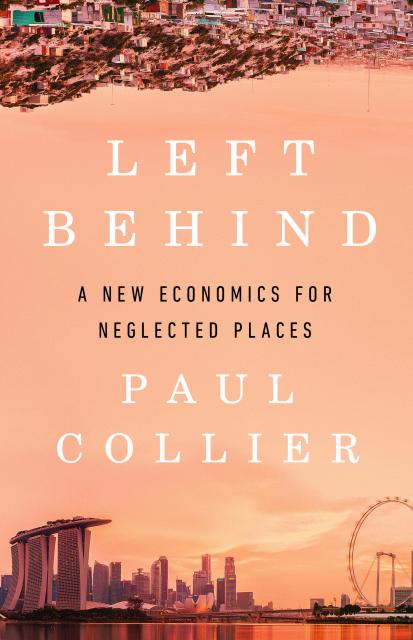
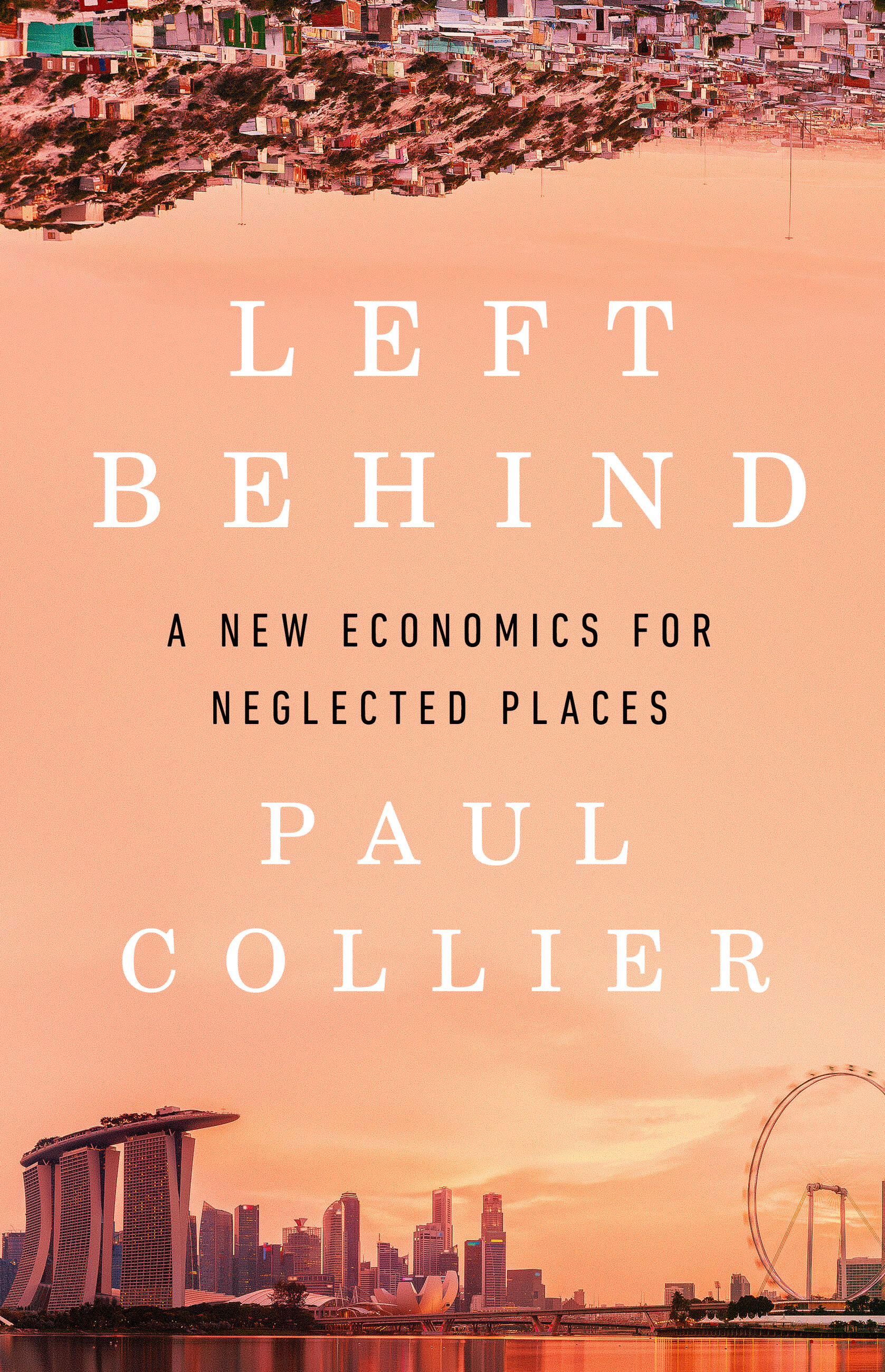
Left Behind

A New Economics for Neglected Places

Left Behind Open the full-size image

Loading

Contributors

By Paul Collier

Formats and Prices

On Sale
Aug 6, 2024
Page Count
304 pages
Publisher
PublicAffairs
ISBN-13
9781541703094

Price

$32.00

Price

$41.00 CAD

Format

  1. ebook
  2. Audiobook Download (Unabridged)

Format:

  1. Hardcover $32.00 $41.00 CAD
  2. ebook $18.99 $24.99 CAD
  3. Audiobook Download (Unabridged) $27.99

Buy from Other Retailers:

  • Amazon
  • Barnes & Noble
  • Books-A-Million
  • Bookshop
  • Target
  • Walmart

From the bestselling author of The Bottom Billion, the fate of the poorest regions of the world–some of which exist in the richest nations–is examined

A Foreign Affairs Best Book of the Year


Using examples of the “left behind” regions, renowned development economist Paul Collier shows that centralized western economies have been the most ineffective to alleviate poverty—even if nationally the country seems to be growing.

In Left Behind, Collier examines how the assumption that any impoverished area will find a way to progress through market forces has devastated nations all over the world. 

With keen insight, he draws lessons from such disparate fields as behavioral psychology, evolutionary biology, and moral philosophy to explain how we can adapt to the needs of individual economies in order to build a brighter and fairer global future.

Genre:

  • Nonfiction
  • Business & Economics
  • Development
  • Economic Development

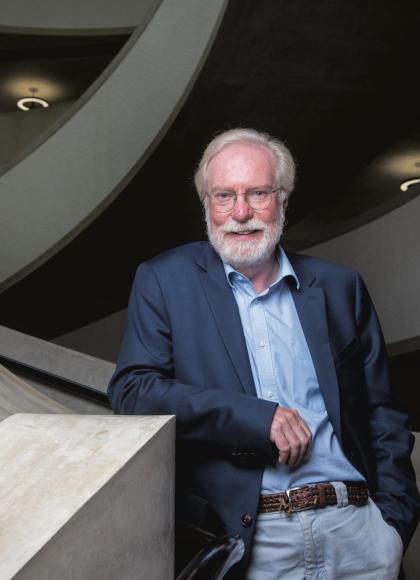
Sir Paul Collier is Professor of Economics and Public Policy at the Blavatnik School of Government and a Professorial Fellow of St Antony’s College, Oxford. From 1998–2003 he took a five-year Public Service leave during which he was Director of the Research Development Department of the World Bank. He is currently a Professeur invité at Sciences Po and a Director of the International Growth Centre at the London School of Economics. He has written for the New York Times, the Financial Times, the Wall Street Journal, and the Washington Post. Collier has authored numerous books, including The Bottom Billion (Oxford University Press, 2007) which in 2008 won the Lionel Gelber, Arthur Ross and Corine prizes and in May 2009 was the joint winner of the Estoril Global Issues Distinguished Book prize.

  • A Foreign Affairs Best Book of the Year
  • "Left Behind is full of good ideas…stimulating, a call to heal the divisions in our societies by bringing justice to the left behind." 
    The Sunday Times
  • "In Left Behind, economist Paul Collier tells a convincing tale of how market fundamentalism created inequality. He offers welcome solutions to global and regional disparities… full of vivid case studies exemplifying Collier’s theoretically simple but practically daunting proposition… a thought-provoking and refreshingly open-minded book."
    Jacobin
  • "Being left behind is a curse on people, places, and even whole countries. Paul Collier brings his astonishing range of global experiences and interdisciplinary knowledge to forge a guidebook for catching up. He challenges the belief that the market is a trustworthy remedy and catalogues the many collective strategies that have worked in the past and can work again. Great wisdom lies herein."
    Sir Angus Deaton, Nobel Laureate for Economic Sciences
  • "Paul Collier has written another brilliant, must-read book for anyone interested in human progress. I greatly enjoyed this book, you will too."
    Baroness Dambisa Moyo, Author of Dead Aid
  • "Brilliant, orthodoxy-upending …this book is a compelling and practical manifesto for a better future. It is not only required reading but demands action."
    Andy Haldane, Chief Executive, Royal Society of Arts
  • "Another tour de force from the acclaimed author of The Bottom Billion. Reading the book left me with a sense of optimism and hope that those who get left behind need not stay that way."
    Ngozi Okonjo-Iweala, Director-General of the World Trade Organization
  • "A wide-ranging account of why societies have gone so badly wrong in the early 21st century by emphasizing individualism, and an ambitious – but essential – agenda for tackling some of the problems."
    Professor Diane Coyle, Author of GDP: A Brief but Affectionate History
  • "In this brilliant, passionate, angry book, Paul Collier makes a deeply unfashionable but completely convincing case for hope. Drawing on a wide range of fascinating/persuasive/hugely interesting case studies from across the world Collier shows that with appropriate support left behind places can “spiral up” – rebuilding their communities and their economies through respect, hard work and good governance. In the process he draws on the latest research to show us what good states look like and how they operate. A manual for the future for all of us."
    Rebecca Henderson, John and Natty McArthur University Professor, Harvard University
  • “Practical lessons for how neglected places can be drawn back into the mainstream. Collier’s vision of a more inclusive and prosperous world is alluring. This book tells us how we might get there.”
    Raghu Rajan, professor of finance, Booth School of Business, University of Chicago
  • "Paul Collier shows how centralized authority and economic orthodoxy have hollowed out communities and deepened the divide between prosperous and neglected places. Ranging across politics, economics, and moral philosophy, he offers a compelling vision for renewal. This tour de force book points the way to a political economy of shared prosperity and common purpose."
    Michael J. Sandel, Author of The Tyranny of Merit

You May Also Like

Poor Economics
Poor Economics $19.99 $25.99 CAD
9781478935414
9781478935414
Geek Heresy
Geek Heresy $27.99 $34.99 CAD
Turnaround
Turnaround $26.99 $30.00 CAD
Getting Better
Getting Better $19.99 $25.99 CAD

Featured Post

August 20 2024

The Free Market Myth

The crises that unfettered capitalism can’t solve After losing their core industries, some places enter into an economic free-fall from which they never recover. When it comes to understanding why, we should think of two dinghies at sea, says Sir Paul Collier, Professor of Economics and Public Policy at the Blavatnik School of Government and…
Read full article
The Free Market Myth

Paul Collier

About the Author

Sir Paul Collier is Professor of Economics and Public Policy at the Blavatnik School of Government and a Professorial Fellow of St Antony’s College, Oxford. From 1998–2003 he took a five-year Public Service leave during which he was Director of the Research Development Department of the World Bank. He is currently a Professeur invité at Sciences Po and a Director of the International Growth Centre at the London School of Economics. He has written for the New York Times, the Financial Times, the Wall Street Journal, and the Washington Post. Collier has authored numerous books, including The Bottom Billion (Oxford University Press, 2007) which in 2008 won the Lionel Gelber, Arthur Ross and Corine prizes and in May 2009 was the joint winner of the Estoril Global Issues Distinguished Book prize.

Learn more about this author

Newsletter Signup

Get recommended reads, deals, and more from Hachette

By clicking ‘Sign Up,’ I acknowledge that I have read and agree to Hachette Book Group’s Privacy Policy and Terms of Use

▲
HBG Distribution logo
  • FAQ
  • Vendors
  • Cookie Policy
  • Report Piracy
  • Fraud Alert
  • CPSIA
  • GPSR
© 2025 Hachette Book Group | Terms of Use | Privacy Policy | Contact Us | Do Not Sell My Personal Information