Email Novel Suspects Logo
Hachette provides comprehensive global distribution services in the following territories:

United States flag Switch to United States region United Kingdom flag Switch to United Kingdom region Australia flag Switch to Australia region India flag Switch to India region

Hachette Book Group menu

  • Home
  • Publishers
  • Customers
  • Sustainability
  • Retailer Portal
  • Location
  • Our Culture
  • Our Careers
Go to Hachette Book Group home

Hachette Book Group menu

  • Home
  • Publishers
  • Customers
  • Sustainability
  • Retailer Portal
  • Location
  • Our Culture
  • Our Careers

By clicking “Accept,” you agree to the use of cookies and similar technologies on your device as set forth in our Cookie Policy and our Privacy Policy. Please note that certain cookies are essential for this website to function properly and do not require user consent to be deployed.

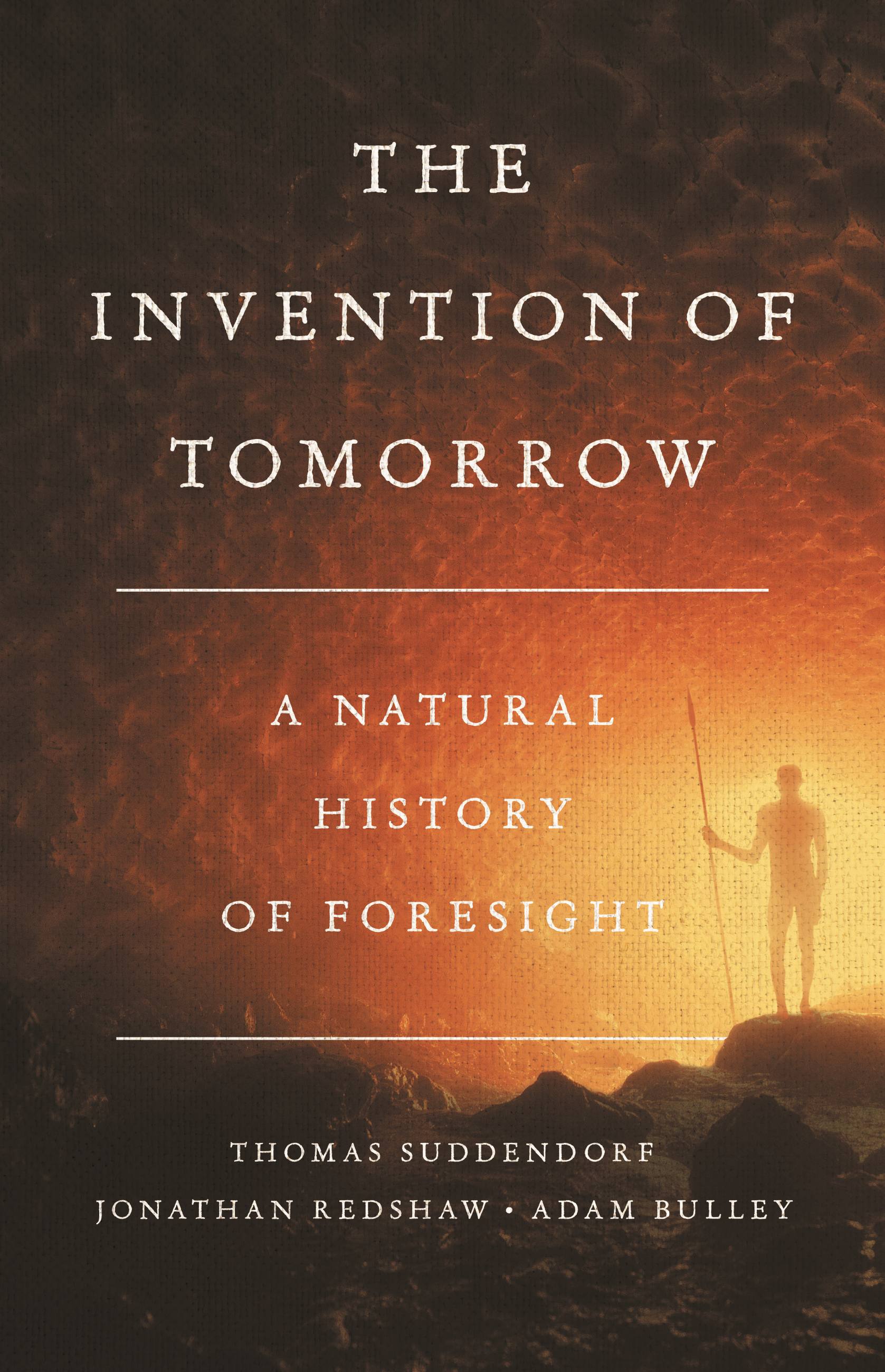
The Invention of Tomorrow

A Natural History of Foresight
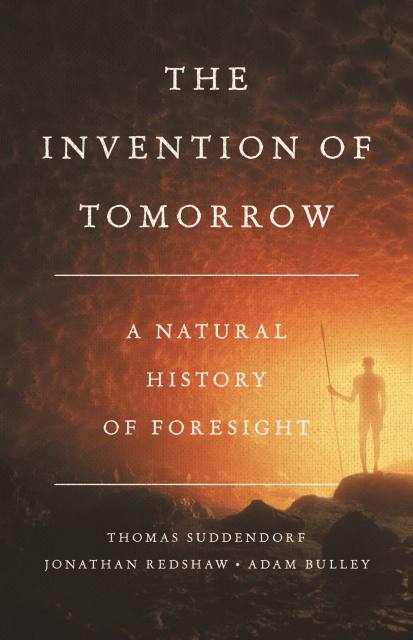
The Invention of Tomorrow Open the full-size image

Loading

Contributors

By Thomas Suddendorf

By Jonathan Redshaw

By Adam Bulley

Formats and Prices

On Sale
Sep 20, 2022
Page Count
304 pages
Publisher
Basic Books
ISBN-13
9781541675728

Price

$30.00

Price

$38.00 CAD

Format

  1. ebook

Format:

  1. Hardcover $30.00 $38.00 CAD
  2. ebook $18.99 $24.99 CAD

Buy from Other Retailers:

  • Amazon
  • Barnes & Noble
  • Books-A-Million
  • Bookshop
  • Target
  • Walmart

A spellbinding exploration of the human capacity to imagine the future 

Our ability to think about the future is one of the most powerful tools at our disposal. In The Invention of Tomorrow, cognitive scientists Thomas Suddendorf, Jonathan Redshaw, and Adam Bulley argue that its emergence transformed humans from unremarkable primates to creatures that hold the destiny of the planet in their hands.  

Drawing on their own cutting-edge research, the authors break down the science of foresight, showing us where it comes from, how it works, and how it made our world. Journeying through biology, psychology, history, and culture, they show that thinking ahead is at the heart of human nature—even if we often get it terribly wrong. Incisive and expansive, The Invention of Tomorrow offers a fresh perspective on the human tale that shows how our species clawed its way to control the future.

Genre:

  • Nonfiction
  • Psychology
  • Cognitive Psychology & Cognition

THOMAS SUDDENDORF is a professor in the School of Psychology at the University of Queensland, Australia. He is the author of the critically acclaimed book The Gap: The Science Of What Separates Us From Other Animals (Basic Books, 2013). Suddendorf is an award-winning researcher who pioneered the study of “mental time travel.” His work has been featured in leading scientific journals including Science and Trends in Cognitive Sciences and in popular outlets including Scientific American and New Scientist. He lives in Brisbane, Australia.

JONATHAN REDSHAW is a postdoctoral fellow at the University of Queensland. He has published extensively on the development and evolution of mental time travel, focusing on how children and animals think about uncertain future events. He was named a 2021 Rising Star by the Association for Psychological Science. He lives in Brisbane, Australia.

ADAM BULLEY is a postdoctoral fellow at the University of Sydney and at Harvard University, where he researches the cognitive science of foresight and decision-making. He has won numerous honors and awards for his research and teaching. He lives in Sydney, Australia.

  • A Nature Book Reviews Best Science Pick
  • “The authors of this exciting book argue vividly and convincingly that our ability to immerse ourselves mentally in past and future worlds is what makes us such a philosophizing, technologizing, and cogitating species. It’s a hot topic in cognitive neuroscience and a stroke of insight about what makes humans human.”
     
    Steven Pinker, Johnstone Professor of Psychology, Harvard University, and author of Rationality
  • “[A] thoughtful, far-ranging study of foresight” 
    Nature
  • “Meticulously researched, thought-provoking, and engrossing… The book is jam-packed with stories–some historical, some scientific–that are easy to follow. The authors punctuate the narrative with just the right amount of humor and incisive commentary.”
    Psychology Today
  • “Ambitiously stretching from ancient Greece to the present day, this history of foresight…dives into the myriad ways humans have attempted to predict the future.”
    The Globe and Mail
  • ““The Invention of Tomorrow” explores the transformative human power to envision the future and its evolutionary impact.”
    Undark Magazine
  • “A fascinating perspective on what it means to be human, told with a clear voice and an expansive canvas… Sprinkled throughout the book are well-placed moments of deadpan humor to leaven the authoritative research.” 
    Kirkus
  • “Stimulating […] sure to captivate popular science readers. Fans of Steven Pinker will want to check this out.”
    Publishers Weekly
  • “A phenomenal book… brilliantly written, and providing a fresh perspective on cognition.” 
    Nicole Barbaro, Bookmarked Reads
  • “Why is our ability to think ahead enormously greater than it is in other species? The Invention of Tomorrow provides a fascinating and authoritative look at one of humanity's most important and least explored powers.”
    Richard Wrangham, Ruth Moore Professor of Anthropology, Harvard University, and author of Catching Fire
  • “A fascinating exploration of the power and potential of the human mind – and the importance of future thinking for the success of our species.”
    Tali Sharot, Professor of Cognitive Neuroscience, University College London and MIT, and author of The Influential Mind
  • “Beautifully written. I often re-read sections, not because I didn’t understand what [they] wrote, but simply for the pleasure of reading [their] prose.”
    David Bjorklund, Professor of Psychology, Florida Atlantic University, and author of How Children Invented Humanity
  • “A fascinating and thoughtful new book on the extraordinary human capacity for mental time travel - and why we need it to help navigate our turbulent futures.” 
    Roman Krznaric, philosopher

You May Also Like

The Suggestible Brain
The Suggestible Brain $30.00 $39.00 CAD
Third Millennium Thinking
Third Millennium Thinking $30.00 $38.00 CAD
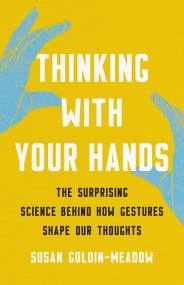
Thinking with Your Hands
Thinking with Your Hands $30.00 $38.00 CAD
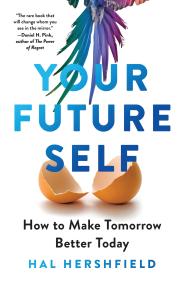
Your Future Self
Your Future Self $29.00 $37.00 CAD
More Numbers Every Day
More Numbers Every Day $28.00 $35.00 CAD

Newsletter Signup

Get recommended reads, deals, and more from Hachette

By clicking ‘Sign Up,’ I acknowledge that I have read and agree to Hachette Book Group’s Privacy Policy and Terms of Use

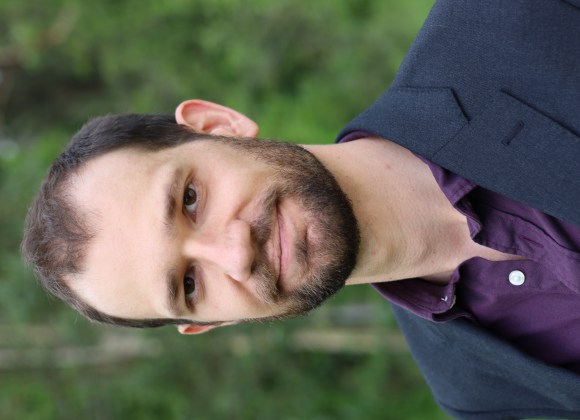
Thomas Suddendorf

About the Author

THOMAS SUDDENDORF is a professor in the School of Psychology at the University of Queensland, Australia. He is the author of the critically acclaimed book The Gap: The Science Of What Separates Us From Other Animals (Basic Books, 2013). Suddendorf is an award-winning researcher who pioneered the study of “mental time travel.” His work has been featured in leading scientific journals including Science and Trends in Cognitive Sciences and in popular outlets including Scientific American and New Scientist. He lives in Brisbane, Australia.

JONATHAN REDSHAW is a postdoctoral fellow at the University of Queensland. He has published extensively on the development and evolution of mental time travel, focusing on how children and animals think about uncertain future events. He was named a 2021 Rising Star by the Association for Psychological Science. He lives in Brisbane, Australia.

ADAM BULLEY is a postdoctoral fellow at the University of Sydney and at Harvard University, where he researches the cognitive science of foresight and decision-making. He has won numerous honors and awards for his research and teaching. He lives in Sydney, Australia.

Learn more about this author

Jonathan Redshaw

About the Author

JONATHAN REDSHAW is a postdoctoral fellow at the University of Queensland. He has published extensively on the development and evolution of mental time travel, focusing on how children and animals think about uncertain future events. He was named a 2021 Rising Star by the Association for Psychological Science. He lives in Brisbane, Australia.

Learn more about this author

▲
HBG Distribution logo
  • FAQ
  • Vendors
  • Cookie Policy
  • Report Piracy
  • Fraud Alert
  • CPSIA
  • GPSR
© 2025 Hachette Book Group | Terms of Use | Privacy Policy | Contact Us | Do Not Sell My Personal Information